Empowering Communities Through Life-Saving Skills: Basic Life Support (BLS) Training Sessions
- September 22, 2025
- Posted by: admin
- Categories: Projects, Updates

Introduction
In April and May 2025, the Pakistan Institute of Living and Learning (PILL), in partnership with local facilitators, delivered Basic Life Support (BLS) training sessions designed to equip participants with essential emergency response skills. These sessions are part of a broader initiative to build basic life support capacity across communities, particularly in low- and middle-income countries (LMICs).
This BLS training programme reflects GMHCP’s values of community engagement, health education, and accessible care. Delivered through a blended model—combining theoretical instruction with hands-on practice—the programme enhances both knowledge and practical competence in life-saving procedures.
Training Overview
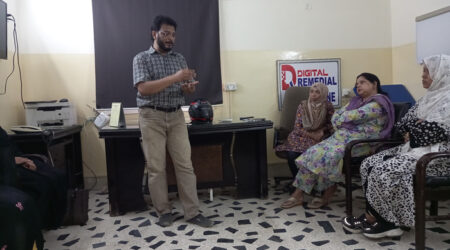
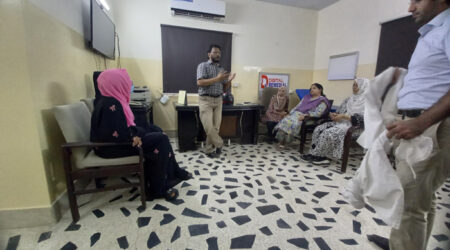
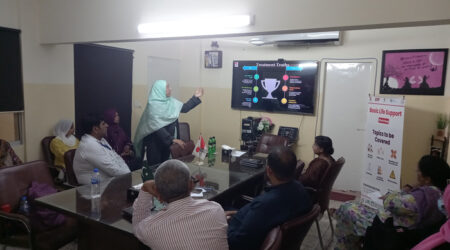
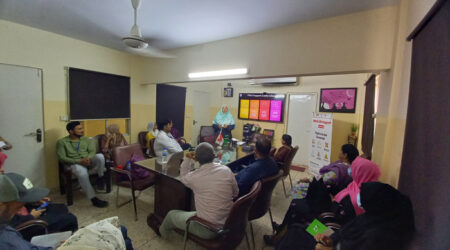
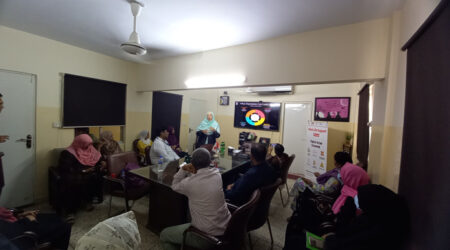
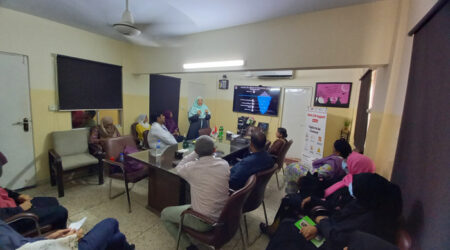
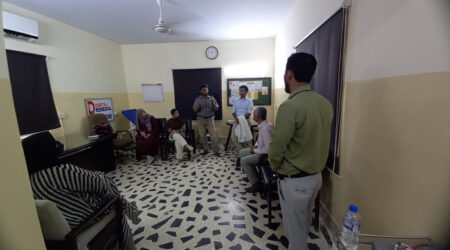
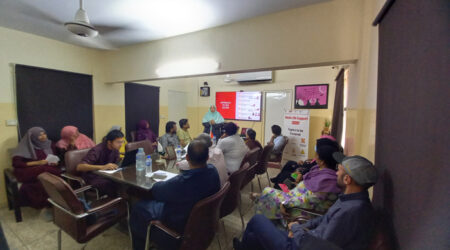
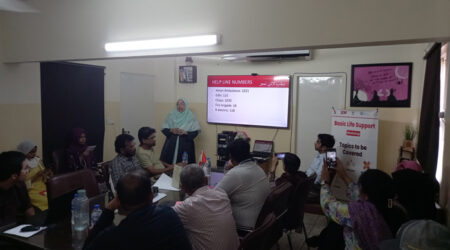
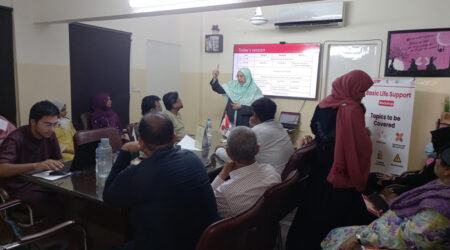
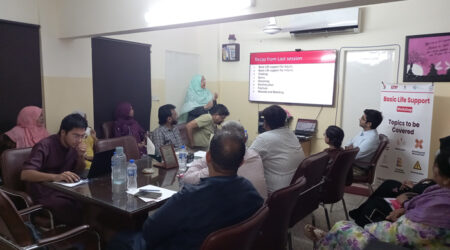
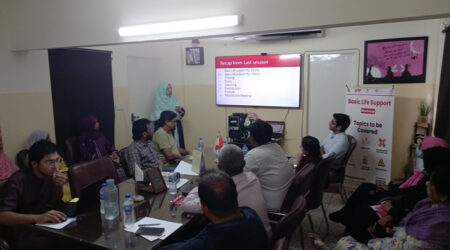
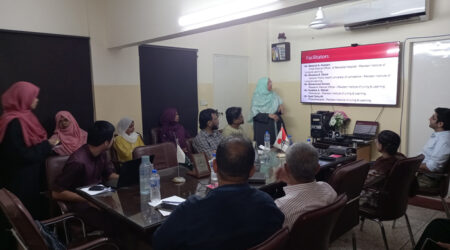
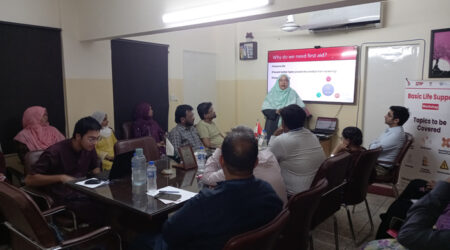
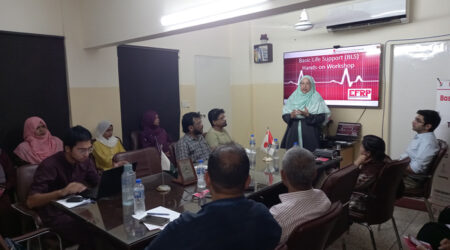
The BLS training was conducted through a blended format in Karachi, combining an interactive 2.5-hour online session on 26th April 2025 with a 4-hour in-person hands-on session on 3rd May 2025 in Karachi. A total of 17 participants attended.
The training was designed to deliver both theoretical knowledge and practical skills essential for emergency response. The online session incorporated tools like Mentimeter and quizzes to keep participants engaged, with pre- and post-training evaluations used to assess learning outcomes.
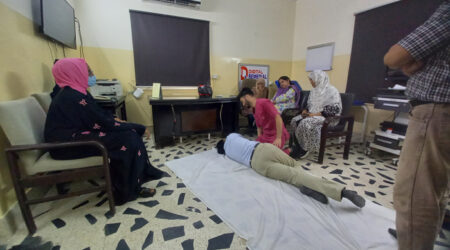
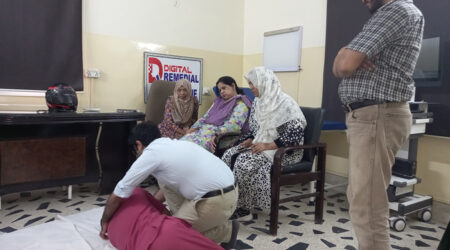
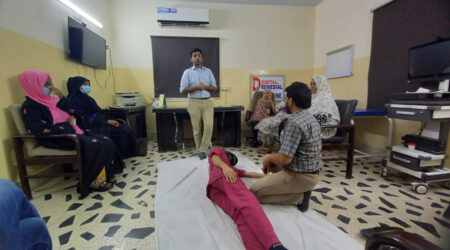
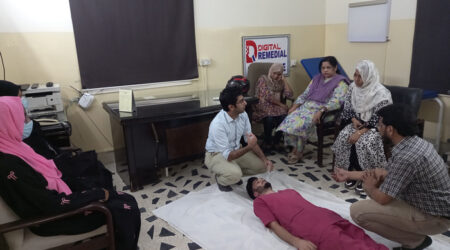
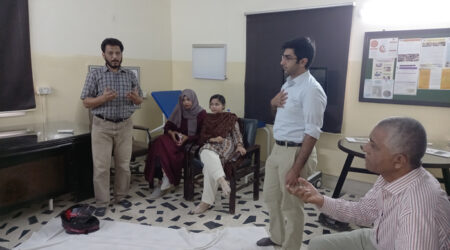
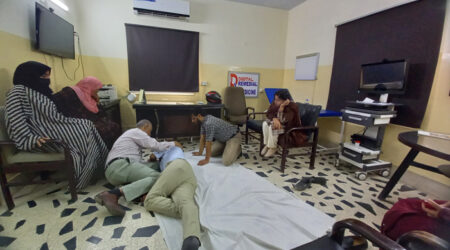
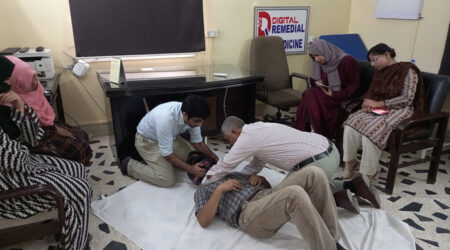
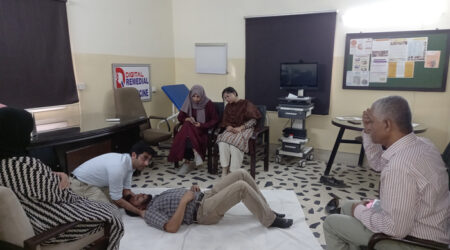
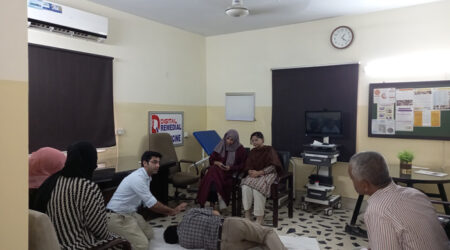
The hands-on component offered participants practical training in CPR, emergency first aid, and critical life-saving techniques through rotating station-based simulations, each focusing on a critical area of care:
● Station 1 covered Adult BLS, led by Dr. Masood Andalib, an expert in emergency medicine and adult critical care.
● Station 2 focused on Paediatric BLS, led by Dr. Munazza S Obaid, a public health specialist with experience with community and Paediatrics.
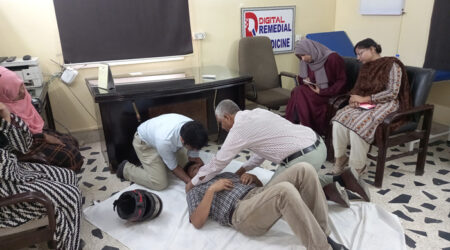
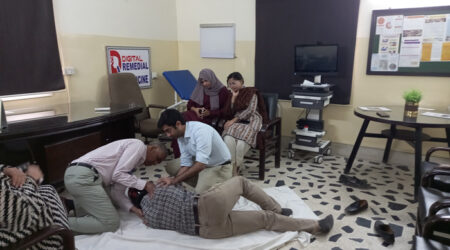
● Station 3 addressed Recovery Position and C-Spine Immobilisation, led by Dr. Muhammad A. Ashraf and Dr. Syed Tariq Ali, both experienced in trauma care and neuromuscular stabilisation.
Key Topics Covered:
1. Chain of Survival: The training began with an introduction to the “Chain of Survival,” emphasising early recognition of cardiac arrest, immediate CPR, rapid defibrillation, advanced life support, and post-resuscitation care.
2. Recognising Cardiac Arrest: Participants were taught how to identify the signs of cardiac arrest, including lack of responsiveness and abnormal breathing patterns.
3. Adult BLS and AED Use: Step-by-step procedures for performing adult CPR were demonstrated, including the use of an Automated External Defibrillator (AED) to restart a stopped heart.
4. BLS for Children and Infants: The training also addressed modifications in CPR for children and infants, covering compression-to-breath ratios, and roles of single vs. multiple rescuers.
5. Choking Relief: Practical demonstrations showed how to respond to choking in adults, children, and infants using abdominal thrusts (Heimlich maneuver), back blows, and chest thrusts.
6. Burns and First Aid: Participants learned appropriate first aid responses for burns, including cooling the affected area with clean, running water, covering it with a sterile dressing, and avoiding the application of ice, ointments, or other substances that may worsen the injury.
7. Drowning: The training emphasised the critical importance of rescue breathing in drowning cases and the need to initiate CPR immediately after the individual is safely removed from the water.
8. Electrocution: The session highlighted the importance of ensuring the power source is turned off before approaching the victim. It also addressed the risk of serious internal injuries, which may not always be visible externally.
9. Fractures: Participants were taught how to provide basic first aid for suspected fractures by immobilising the injured area and taking steps to prevent further harm until professional medical assistance is available.
10. Bleeding and Wound Care: The training covered key techniques such as applying direct pressure to control bleeding, using clean dressings, and elevating the affected limb. The correct use of tourniquets was also introduced as a last-resort measure when bleeding cannot be controlled by other means.
Reflections on Practical Skills
Following a short orientation, participants took part in CPR simulations using adult, child, and infant mannequins ensuring individual practice and skill reinforcement. They practiced the recovery position with volunteer assistance and learned correct spinal immobilisation techniques. These practical exercises enabled learners to internalise procedures in a safe, supervised environment, increasing their confidence to respond during emergencies.
Mental Health Integration
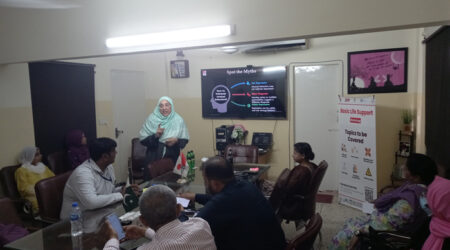
As part of the session’s holistic approach, a brief yet impactful presentation on Depression Literacy was delivered by Dr. Munazza S Obaid. This aimed to improve participants’ understanding of mental health as a critical part of emergency and general healthcare. A pre- and post-presentation questionnaire allowed facilitators to measure participants’ increased awareness of depression and psychological first aid.
The Way Forward
With a growing demand for BLS training across the country, our goal is to deliver these sessions in every district in Pakistan. Recognising the potential to reach even more communities, we are expanding this initiative into a hybrid model by developing a Moodle-based blended course, allowing learners to complete theoretical modules online before participating in in-person skill-building sessions.
Furthermore, we are actively exploring partnerships to scale this training globally, particularly in other LMICs where access to emergency medical education remains limited. By combining scalable e-learning platforms with local practical delivery, we envision a globally accessible BLS training programme that empowers communities everywhere with essential life-saving knowledge.
Conclusion
The BLS training sessions reflect a strong commitment to health education, community resilience, and lifesaving preparedness. By blending interactive content with hands-on experience and incorporating mental health literacy, this initiative equips individuals not only with the skills to save lives but also to support psychological well-being during crises. As we look ahead, our mission is to make this programme accessible, scalable, and sustainable—locally, nationally, and globally.
Acknowledgements:
The successful execution of the workshop was supported by:
Dr. Hudebia, Mr. Zahid, Mr. Safdar, and Mr. Zamin – responsible for logistics, room preparation, lunch arrangements, and photography. Photography was carried out with participant consent.
M. Bastle Ullah – managed the technical setup, including Google Form creation, dispersion and management.